
Siding Installation & Repair in Lake City, MI
WHAT WE DO
In the 2025 Cost vs. Value report for the East North Central region, fiber-cement siding recoups 101.2% of its cost at resale and vinyl siding 80.4%. Craig McLeod Construction LLC
handles siding installation and repair for homes and commercial buildings in Lake City, MI, Cadillac, and Manton, working in vinyl, fiber cement, wood, metal, and brick, along with panel replacement, trim and molding, rotted sections, soffit and fascia, and resealed joints and seams. Estimates come upfront, in writing, with no hidden fees.
WHERE WE INSTALL
Walls That Face Wind, Rain, And Freeze-Thaw All Year
A wall in this part of the state takes driving rain off the lake, wind that pushes water sideways under a lap, and 167.5 days a year that drop below freezing. Water gets in, then expands. That cycle finds every unsealed joint and every fastener set wrong. We clad cottages, farmhouses, in-town ranches, storefronts on the main streets of Cadillac and Manton, and the occasional pole barn, and each of those walls gets flashed, lapped, and fastened for the exposure it actually sits in.
Siding Services We Provide
Homes and commercial buildings both run through the same sequence: strip, inspect, correct whatever is behind the cladding, then install. Turnarounds stay short because the material is on site before we start.
01
Vinyl Siding Installation
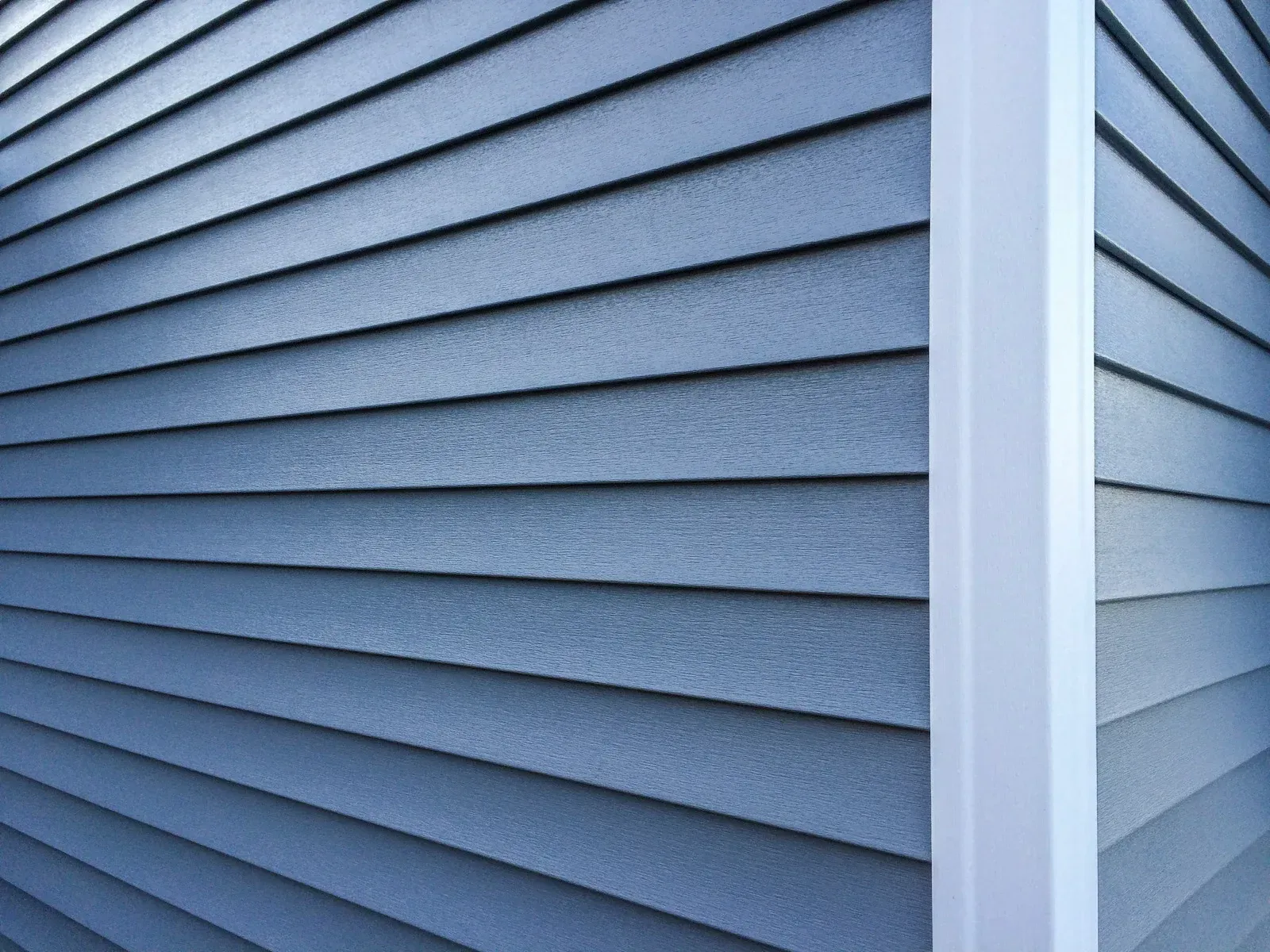
Panels have to hang, not be pinned. Fasteners are centered in the slots and left loose enough for movement, corners and J-channel are set square, and laps face away from the approach so the seams disappear from the road.
02
Fiber Cement Siding Installation
Heavier board, tighter tolerances, and a joint pattern that has to be planned rather than improvised. Cuts get sealed, butt joints get backed with flashing, and the fastening schedule follows the exposure so nothing telegraphs or waves after the first winter.
03
Wood Siding Installation
Clapboard, shiplap, and shakes still look right on an older house and a lakeside cottage. Back-priming, correct nail placement, and a proper drainage gap behind the boards are what decide whether the finish lasts or peels within a couple of seasons.
04
Metal And Brick Exteriors
Certain elevations call for metal panels or a brick face instead. Both need attention where they meet windows, rooflines, and other cladding, since those transitions are where water gets behind an otherwise solid wall and stays there long enough to rot framing.
05
Panel, Trim, And Molding Repairs
Cracked, dented, and missing pieces come out and matching replacements go in, keyed into the existing courses. Damaged trim, corner boards, and molding get rebuilt so the patch is not the first thing a visitor notices from the driveway.
06
Soffit, Fascia, And Sealant Work
Overhangs take the worst of the runoff and the least of the attention. Rotted fascia and sagging soffit panels get replaced, vented sections stay vented, and joints and seams are recaulked with a product that stays flexible in cold weather.
Siding Problems We Get Called Out For
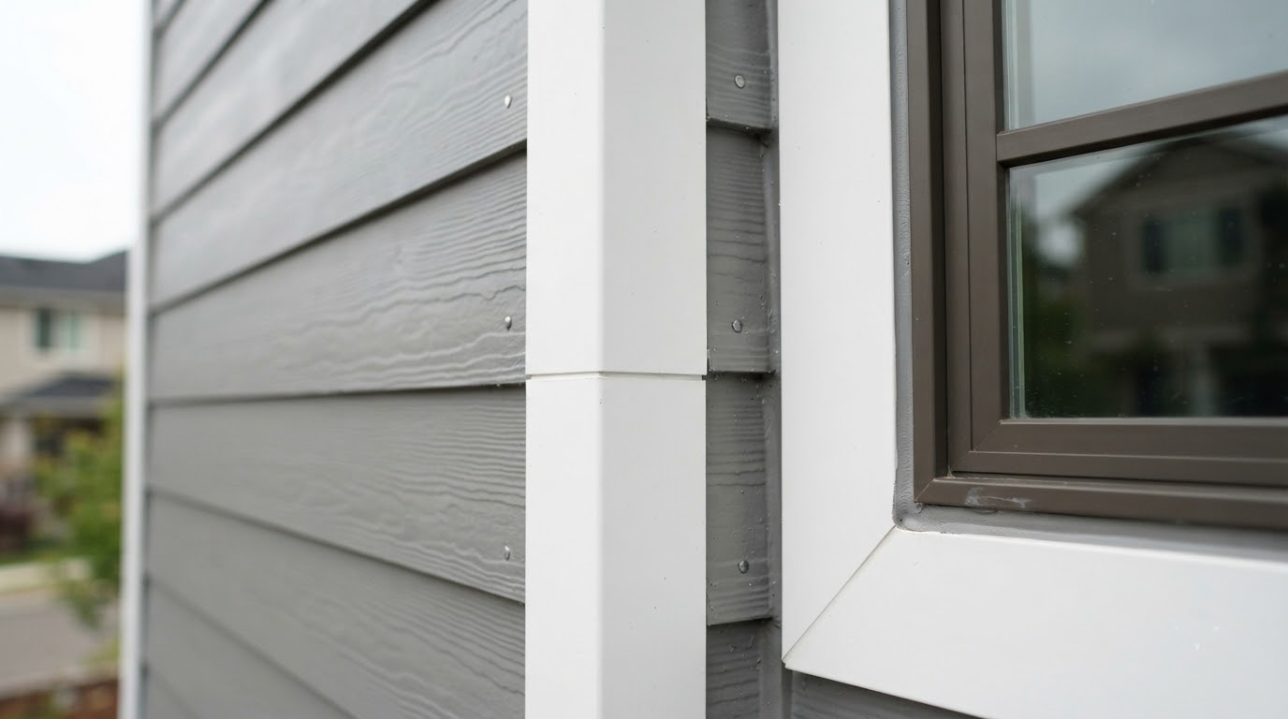
Nearly every call starts with something visible and ends somewhere behind the wall. Here is what shows on the outside, and what each of these usually means about the sheathing, the flashing, or the framing underneath.
01
Cracks, Dents, And Holes
Hail, ladders, string trimmers, and stray branches all leave the same result: an opening. Even a hairline crack lets water in behind the panel, where it has nowhere to dry and nothing stopping it from reaching the sheathing.
02
Loose Or Warped Panels
Rattling in the wind or a wavy line along a course means the fasteners have let go or the material was nailed too tight to move. Both invite wind-driven rain into the wall and get worse with every freeze.
03
Rot And Decay Behind The Cladding
Soft spots, dark staining, and a screwdriver that sinks in are signs the water has been sitting there a while. Repair means opening the wall up, cutting back to sound framing, replacing what is gone, and correcting the flashing that let it happen.
04
Damaged Trim And Molding
Corner boards, window casings, and drip caps take a beating because they sit at the edges where everything meets. Once they split or pull loose, the joint behind them opens up and the panels alongside start moving too.
05
Failed Joints And Seams
Caulk hardens, cracks, and pulls away from one side, usually at butt joints and where cladding meets brick or trim. Resealing is straightforward work that gets skipped for years and then costs a wall section to put right.
06
Faded Or Chalking Finish
Powdery residue on your hand after touching the wall means the surface coat is breaking down under sunlight. On painted materials that calls for refinishing, and on a fully faded wall it usually signals the end of a useful lifespan.
WHO WE ARE
Water Always Finds The Lap That Was Rushed
Cladding is unforgiving work. A nail driven too tight, a butt joint left without flashing, a course pulled snug in July that has nowhere to move in January: none of it shows on the first walkthrough, and all of it shows once the wall has been through a few winters. We are family-owned, licensed, certified, bonded, and insured, with 20+ years of exterior work behind us, and we would rather spend the extra hour than come back. Reach us through our contact page for a free estimate.
Why Choose Craig McLeod Construction LLC
Built on Quality & Trust
01
Construction Support From Start to Finish
We offer design, drafting, construction, and project management for residential and commercial projects. From new builds to renovations and additions, we help guide your project from the initial plans through completion.
02
Built Around Your Goals
We work closely with you to understand your ideas, preferences, and budget before developing a plan. Whether you’re building a home or updating an existing space, we tailor our approach to your needs.
03
Clear Communication Throughout Your Project
We answer your questions in straightforward language and keep you informed as work progresses. Our approach emphasizes detailed planning and open communication so you understand what’s happening at each stage.
04
Respect for Your Property
We maintain clean, organized worksites and take steps to minimize disruption during construction. Our team prioritizes safety and treats your property with care throughout the project.
FAQs - Frequently Asked Questions
How do I know if I need new siding?
Widespread cracking, panels that are loose across several courses, rot found behind the cladding, and a finish that chalks off on your hand all point to replacement. Paint that fails again within a year or two is another reliable signal.
Is it better to repair or replace damaged siding?
Repair when the damage is confined to a few panels and the wall behind them is dry and sound. Replace when problems repeat across elevations, matching material is no longer available, or the sheathing has taken on water in more than one place.
What types of siding material are available?
Vinyl, fiber cement, wood, metal, and brick each work here, and the right pick depends on the house, the exposure, and how much upkeep you want. Craig McLeod Construction LLC walks through the options with owners in Lake City, MI before quoting anything.
How does fiber cement siding compare to vinyl?
Fiber cement is heavier, holds paint longer, and resists impact better, while vinyl costs less and needs almost no maintenance. Resale value differs too: the 2025 regional figures put fiber cement at 101.2% of cost recouped and vinyl at 80.4%.
What is the best time of year to install siding?
Late spring through fall is easiest, since sealants cure properly and vinyl is less brittle to cut and handle. Work still goes on in colder months with adjustments to material handling, expansion gaps, and the products used at joints.
Will you remove the old siding and dispose of the debris?
Disposal is included. The old cladding comes off, the sheathing underneath gets inspected, and every scrap we take down leaves with us. Craig McLeod Construction LLC keeps sites in Lake City, MI organized daily and walks the grounds for stray fasteners and offcuts.
What happens if you find unexpected damage during a siding replacement?
Photos, an explanation, and a written price reach you the same day, before any extra work begins. Rot, insect damage, and water-stained sheathing are common finds on older walls, and every change gets signed off by both sides first.
How do I maintain new siding?
Wash it once a year, keep landscaping trimmed back off the wall, and clear the gutters so runoff is not sheeting down the face. Check caulking at trim and openings each spring, and repaint wood or fiber cement when the finish dulls.
Exteriors That Keep The Weather Out And Look Right From The Road
Siding is the part of a building people judge from the driveway, and it is also the part that decides whether the framing behind it stays dry season after season. Both of those matter, and both come down to what happens at the laps, the corners, the openings, and the places where one material meets another. Craig McLeod Construction LLC installs and repairs exteriors on houses and commercial buildings across Lake City, MI, Cadillac, and Manton, with a licensed and insured team, quick turnarounds, and upfront pricing. Send us photos and a description through our contact page and we will schedule a free estimate.