Deck Construction in Lake City, MI
WHAT WE DO
A guard is required wherever the walking surface sits more than 30 inches above grade, it has to stand 36 inches tall, and its openings must not pass a 4-inch sphere. Craig McLeod Construction LLC
builds decks in Lake City, MI, Cadillac, and Manton with those numbers settled on the drawings. Deck construction covers attached, detached, multi-tier, wraparound, and rooftop structures, the footings and framing under them, and the stairs and railings on top. We are licensed, certified, and insured.
WHERE WE BUILD
Decks On Slopes, Shorelines, And Awkward Back Corners
Very little ground around Lake Missaukee is flat. We build on grades that fall away from the house, on lots where the best view sits behind a stand of trees, and on shorelines where earthwork within 500 feet of the water needs a soil erosion permit before a post hole gets dug. Cadillac and Manton bring the same problem in different shapes: a walkout that lands 9 feet down, a back corner nobody has ever been able to use, a roofline that has to be worked around rather than ignored.
Deck Building Services We Provide
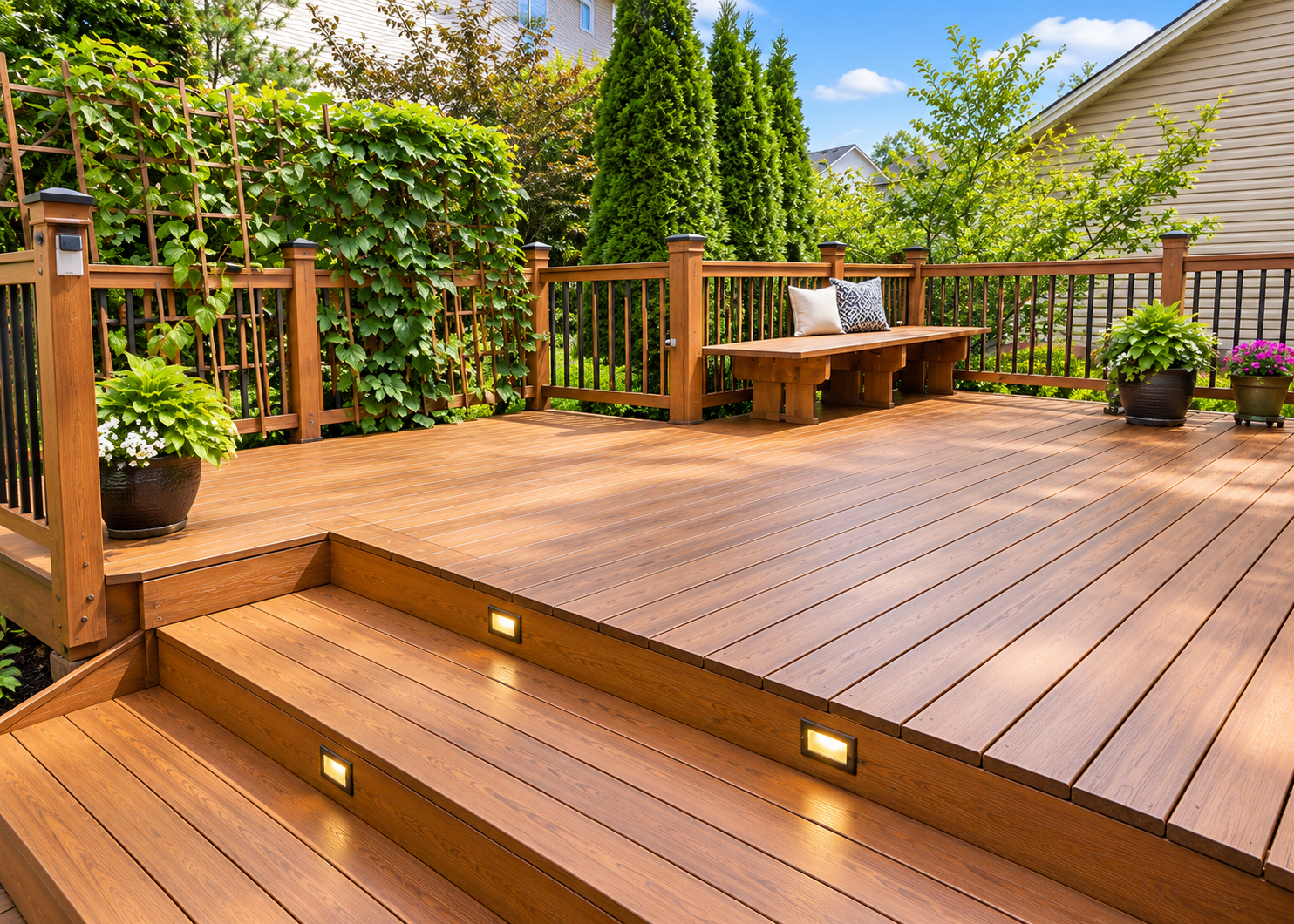
Whether the deck attaches to the house or stands on its own, the same three questions get answered first: where the load goes, how you get up onto it, and what the ground underneath will allow.
01
Attached Decks
Bolted to the house, which makes the ledger and its flashing the job. We size joists to span, set the beam where the framing wants it, and hold the surface below the door threshold so meltwater drains away instead of pooling.
02
Detached Decks
Free of the house entirely, which removes the ledger question and adds a fourth line of posts. These suit a spot by the water, a landing around a fire pit, or anywhere the good ground sits away from the back door.
03
Multi-Tier Decks
Steep ground is easier to take in stages than in a single flight. Levels step down the slope, each with its own framing and guards, so a lot that drops 10 feet turns into usable space instead of a retaining problem.
04
Wraparound Decks
Running around two or three sides of a house gives you morning sun on one corner and shade on another. Corners are where the framing gets interesting, since joists change direction and the guard has to stay continuous through the turn.
05
Rooftop Decks
Over living space everything changes. The roof structure carries the load, the waterproofing membrane sits under the walking surface rather than over it, and drainage has to keep working with snow on top, so pedestals or sleepers hold the finished surface clear.
06
Deck Design And Material Selection
Drawings come first, with the layout, the framing plan, and the material settled before anything is ordered. Wood, wood-plastic composite, vinyl, and organic lumber each behave differently underfoot and over 10 winters, and the choice should follow how you actually use the space.
Decking Materials And What They Ask Of You
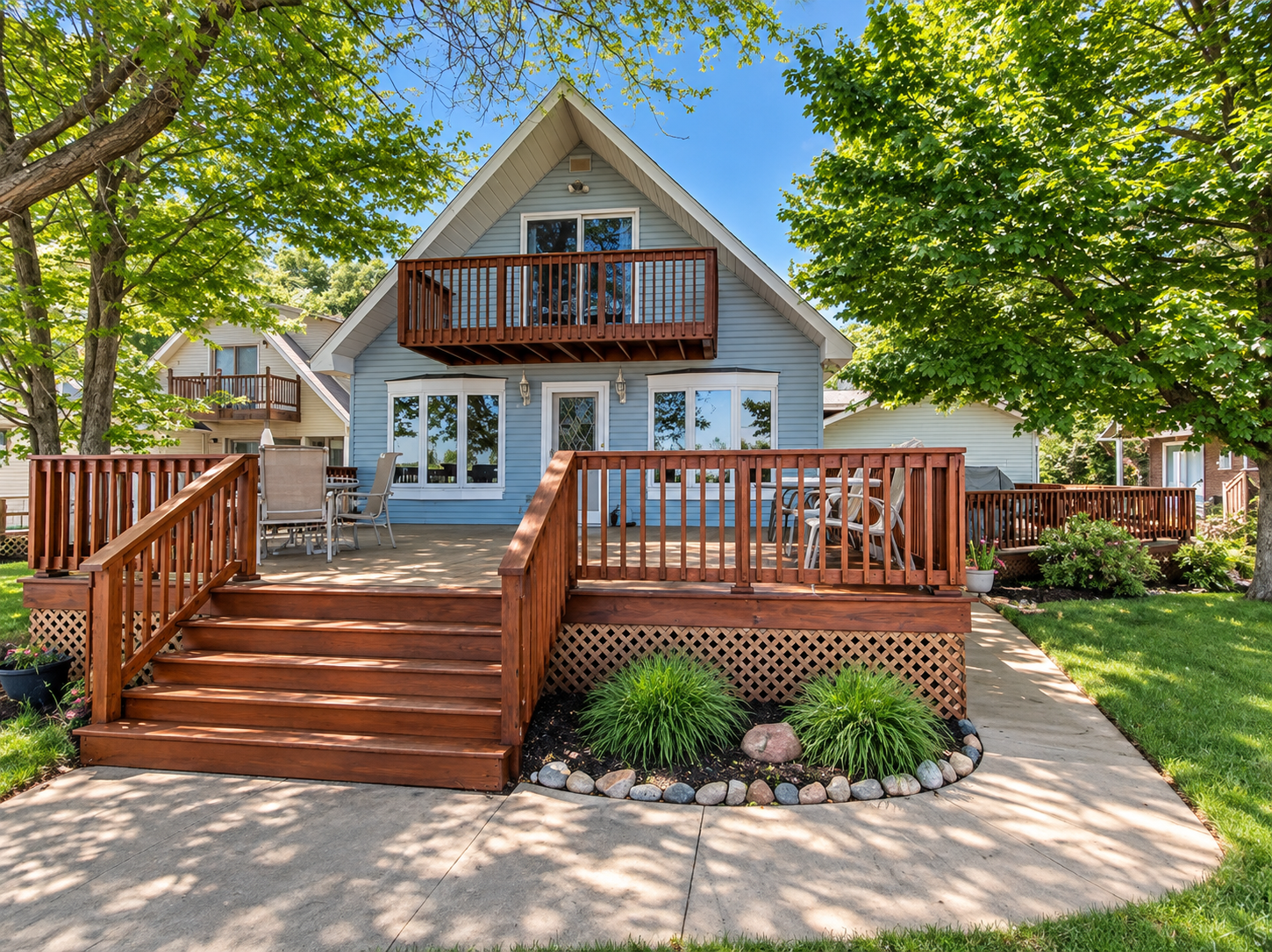
No board is maintenance-free, and anything sold that way has not spent a February outdoors in this county. What follows is what each surface asks of you in upkeep, and what it hands back in return.
01
Wood
Still the surface that returns the most: a wood deck addition recoups 92.5% of its cost at resale in this region. It asks for regular cleaning and attention on a schedule, and it moves with the seasons the way boards do.
02
Wood-Plastic Composite
Ground wood fiber bound in plastic, bought for the upkeep it skips. It recoups 88.4% at resale, holds its color for years, and costs more upfront. It runs hot in direct sun and sags if joists are spaced too far apart.
03
Vinyl
All plastic and no wood fiber, so there is nothing in it for rot or mold to feed on. It stays cooler underfoot than you expect, sheds water completely, and washes clean, though it moves more with temperature and asks for careful fastening.
04
Organic Lumber
Boards left chemically untreated, chosen when you want the material as close to raw as it comes out of the mill. It weathers honestly, needs more attention than any synthetic surface, and suits people who like a deck that shows its years.
05
Railings, Stairs, And Guards
Every guard stands 36 inches tall with openings a 4-inch sphere will not pass. Risers top out at 8 1/4 inches and treads start at 9 inches, with a graspable handrail 34 inches above the nosings at 4 or more risers.
06
Footings And Framing Below
Whatever happens up top depends on this. Footings reach 42 inches below grade to sit under the frost line, posts land square on them, and beams and joists get sized to span so the surface does not bounce under a crowd.
WHO WE ARE
Ledger Flashing Is The Detail That Decides Everything
Most deck failures start at the wall. A ledger fastens with 1/2-inch lags or bolts spaced 10 to 30 inches on center, depending on joist span, and it has to be flashed where it meets the siding, or water runs behind the band joist and rots the house before it rots the deck. We have spent 20+ years getting that joint right, on structures we still drive past. Send your plans or your questions through our contact page and we will set up a risk-free consultation.
Why Choose Craig McLeod Construction LLC
Built on Quality & Trust
01
Construction Support From Start to Finish
We offer design, drafting, construction, and project management for residential and commercial projects. From new builds to renovations and additions, we help guide your project from the initial plans through completion.
02
Built Around Your Goals
We work closely with you to understand your ideas, preferences, and budget before developing a plan. Whether you’re building a home or updating an existing space, we tailor our approach to your needs.
03
Clear Communication Throughout Your Project
We answer your questions in straightforward language and keep you informed as work progresses. Our approach emphasizes detailed planning and open communication so you understand what’s happening at each stage.
04
Respect for Your Property
We maintain clean, organized worksites and take steps to minimize disruption during construction. Our team prioritizes safety and treats your property with care throughout the project.
FAQs - Frequently Asked Questions
Do I need a permit to build a deck?
Yes, in nearly every case. A deck is a structure, so it gets reviewed for footing depth, framing, guards, and stairs like any addition, with inspections along the way. Building without one creates a problem that surfaces when you sell.
How long does a deck last?
Longevity depends on what holds the boards up. Footings below the frost line, a flashed ledger, and corrosion-resistant fasteners decide it. Craig McLeod Construction LLC builds to those details across Lake City, MI, where boards get replaced before sound framing does.
Is composite decking worth it?
For most people, yes, if saved upkeep matters more than the price at the start. Composite recoups 88.4% of its cost at resale in this region against 92.5% for wood, so the extra you pay buys back weekends rather than a better return.
How do wood and composite decking compare?
Wood costs less to install, sands back to look new, and returns 92.5% at resale. Composite costs more, keeps its color, will not rot, and returns 88.4%. Wood asks for regular attention. Composite asks for tighter joist spacing and tolerance for heat.
What is the best railing for a deck?
The one that meets code and suits how you use the deck. Any guard stands 36 inches tall with openings that will not pass a 4-inch sphere, and past that, the decision is sightlines, upkeep, and whether it matches the deck surface.
What should be done with the space under a raised deck?
Keep it dry and it becomes usable. Grade the ground so water runs away from the posts, cover the surface so it does not turn to mud, and leave the footings and post bases reachable, since those get inspected later.
How high can a deck be before a guard is required?
Once the walking surface sits more than 30 inches above grade, a guard becomes mandatory. It must stand at least 36 inches high, and its openings have to be too small for a 4-inch sphere to pass through at any point.
What is the best time of year to build a deck?
Late spring through fall, while the ground is open and concrete cures without help. Footings have to reach 42 inches down, which is slow going in frozen soil, and Craig McLeod Construction LLC books that season early for work around Lake City, MI.
Built To Take Snow, Sun, And Everyone You Invite Over
A deck is the one part of a house people stand on in numbers, which is why the code is specific about guards and the fasteners holding a ledger to a wall. Weather matters as much: 76 inches of snow falls in an average year around Lake City, MI, and it all lands on the framing. Craig McLeod Construction LLC draws, frames, and finishes decks for that, in wood, wood-plastic composite, vinyl, and organic lumber, with 20+ years behind the details, extended warranties on parts and labor, and materials from suppliers we trust. Send your details through our contact page for an honest quote at no risk.